In the clinic
How it's done
Typically administered as outpatient sessions of roughly 20–30 minutes, two to three times weekly over several weeks, delivered by a physiotherapist or trained clinician, often as part of a broader physiotherapy session.
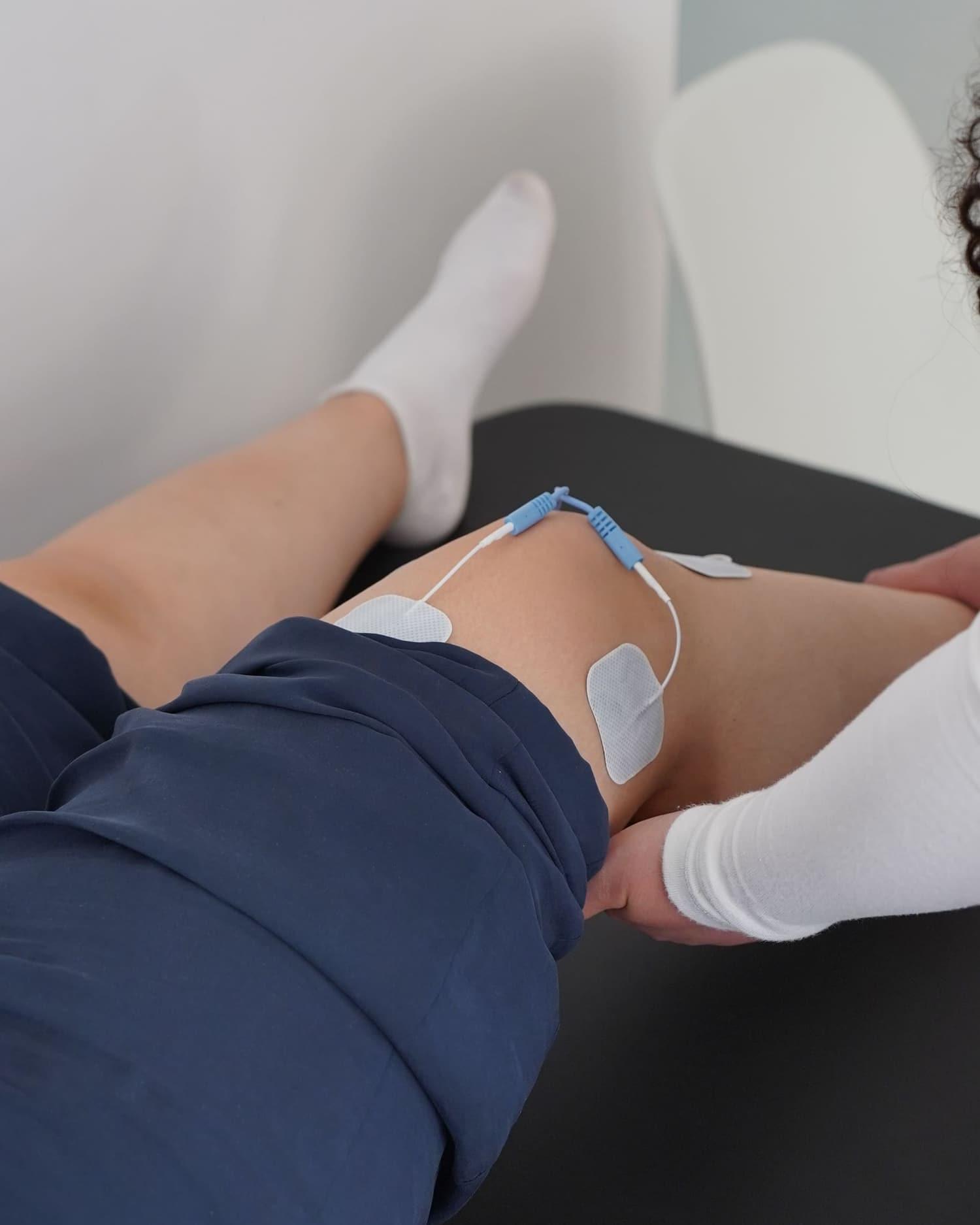
 Pain BridgeNeuromodulation
Very low-level electrical current applied near an area of pain or injury, paired with physiotherapy as part of a coordinated pain-management plan.
What it is and how it works
Very low-level electrical current applied near an area of pain or injury, at a magnitude below the threshold that produces the tingling/muscle-contraction sensation of TENS, intended to support pain modulation and tissue-level recovery.
Assessed first. We look at the whole pain pattern before recommending this.
Individualised. Dose, pace and progression are matched to you.
Reviewed. Progress is checked at follow-ups and the plan changes if it isn't working.
Always prescribed after an assessment, as one part of a wider plan.
In the clinic
Typically administered as outpatient sessions of roughly 20–30 minutes, two to three times weekly over several weeks, delivered by a physiotherapist or trained clinician, often as part of a broader physiotherapy session.
Our approach
MET is used as one component of Pain Bridge's coordinated pain-management approach, paired with physiotherapy rather than offered as a stand-alone fix, consistent with the clinic's individualized-outcomes positioning.
No. MET uses current at a level below what produces the tingling or muscle-contraction sensation associated with TENS, so most patients don't feel the current itself during treatment.
Evidence is mixed and condition-dependent — reviews report benefit for some conditions, such as certain shoulder and knee pain, but not consistently for others, such as chronic low back pain, so it's used as an adjunct alongside physiotherapy rather than a stand-alone treatment.